
A customer agrees to appear in your next film. The interview is booked, the product team has supplied its talking points, and sales wants a version for every stage of the funnel. Before that request becomes a production plan, settle a more useful question: what can this person explain that your brand cannot credibly say for itself?
At Spin, we build customer stories around that difference. The customer carries the experience. The brand supplies the context. Evidence determines which claims survive the edit. For enterprise marketing teams, a strong case study video is a useful answer to a buyer’s doubt, told by someone with firsthand knowledge of the decision.
Choose the question before you choose the customer
“We need a recognizable logo” is an incomplete brief. Identify the audience, the decision it faces and the uncertainty the film should address. Is the concern implementation, adoption, the customer experience or the practical value of a capability? Those questions may require different speakers.
Write a short story hypothesis: this audience needs to understand this change, and this customer can explain it from experience. Treat the hypothesis as something to investigate in a preliminary conversation. Do not promise a result sentence before you have heard the story and checked its support.
Your message house can help connect the customer’s experience to the wider promise. It should guide the questions without dictating the customer’s answers.
Auth0: make an invisible platform visible through people
In Spin’s Auth0 customer film, Wharton Interactive gives an identity platform a concrete human setting. Interviews with Sarah Toms, Ethan Mollick and a learner connect the technology to the experience of digital education. The film was shot over three days in Philadelphia, with social teaser GIFs supporting the main story.
Spin’s Living Color concept carried Auth0’s palette into lighting and art direction. That creative choice gives the film character while the people and their work provide its substance. Our reading of the work: brand expression should help a customer account feel coherent without replacing its specificity.
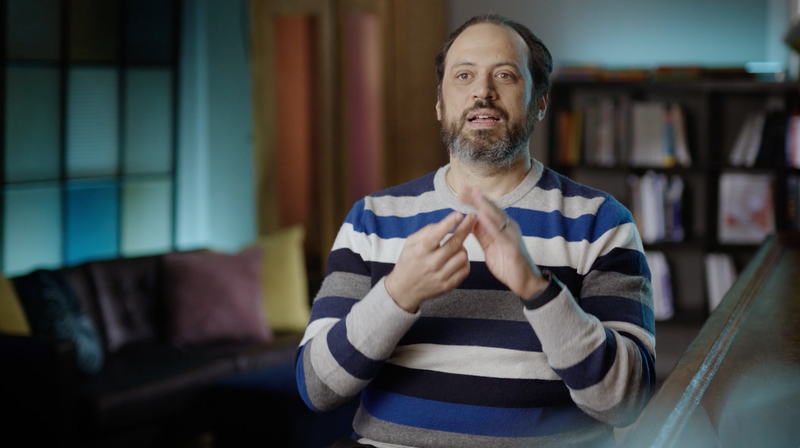
This is evidence of a creative approach, not a claim about conversion lift or customer revenue. Keep that distinction in your own brief: production quality and business results need different forms of support.
Give the story an evidence path
Build the evidence path.
Name the doubt this person can credibly address.
Find the moment that makes the change tangible.
Connect factual claims to sources and context.
Agree who reviews the account and where it can appear.
Before filming, gather the speaker’s account, supporting material and permission to use it. If a number matters, identify its source, baseline, period and limitations. If the value is qualitative, ask for a concrete example: a task that changed, a decision that became possible or a difficulty the team still encounters.
A useful story can acknowledge constraints. Enterprise buyers need to understand the conditions around an experience. Removing every qualification can make a precise account less useful. Keep the speaker’s meaning intact when shortening an answer.
Interview for moments, then build the edit
Send themes and practical expectations ahead of time. During the conversation, ask for a sequence: what was happening, what prompted the decision, what changed in the work, and what the person learned. Follow up on an actual moment rather than asking for a stronger adjective.
For example: “What happened the first time your team used it?” is more likely to produce a scene than “Why is it innovative?” This is a suggested interview prompt, not a quoted Spin client exchange. Prepare room for answers that challenge the initial outline.
After the interview, build a paper edit from the material you actually captured. Check that transitions, graphics and reordered answers preserve context. Use product footage where it explains a mechanism. Let the demo carry detailed product instruction when that is a separate buyer need.

KDP: plan the versions before the shoot
For Kindle Direct Publishing’s author-success videos, Spin interviewed five authors and planned a three-minute master alongside ten short videos of 15 seconds or less. A Seattle bungalow provided a shared setting, with authors’ books helping make the environment specific to their stories. Stills were captured alongside the interviews.
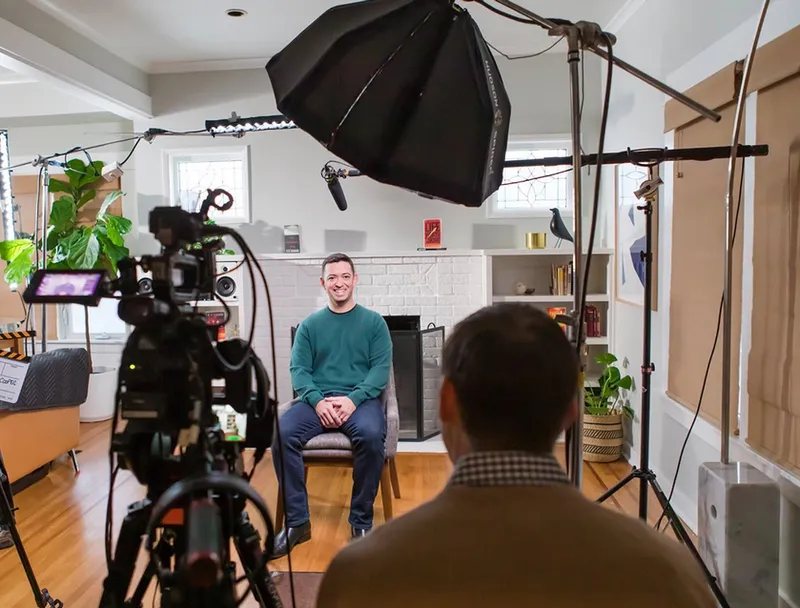
The transferable lesson is planning, not a universal production timetable. Knowing the intended versions early lets the team gather complete thoughts, distinct openings and supporting images. A short film needs its own intelligible story. It should not depend on a long introduction the viewer never sees.
Make approval part of the story plan
Name who can approve the customer’s participation, claims, logos and final cut. Agree the review stages with your client and the featured organization before production. Ask which statements need documentary support and which settings or screens cannot be filmed.
Give reviewers the evidence alongside the edit. A claim list should connect each factual statement to its source and approval owner. Your legal and communications teams can determine appropriate permissions and disclosures for the intended use. The production schedule should allow time for their review.
Define the decision process with the same care you give the shoot. Our guide to working with creative agencies explains why consolidated feedback and clear ownership matter.
Judge usefulness in the conversation it serves
Give sales a short use note: who this story is for, which question it addresses and when to share it. Pair the film with captions, a transcript and an accessible written summary. Keep claim context attached to short versions as well as the main film.
Ask whether the intended audience reaches the relevant evidence, what questions remain, and whether customer-facing teams use the asset. Compare those observations with the purpose set in the brief. Deal movement can inform the discussion, but it does not by itself prove that the film caused a sale.
What should we bring to the first conversation?
Bring the buyer question, possible customers, available evidence, intended placements and known approval dependencies. You do not need a finished script. Explore Spin’s Advertising capabilities or start a conversation. The first creative task is finding the story that deserves to be told.