

A translated line can be correct and still make the wrong promise. The product offer may differ by region. A book cover may belong to a different marketplace. A longer phrase may collide with the moment the animation needs to move on.
Global campaign localization starts with those decisions, while the idea is still taking shape. Spin’s point of view is simple: preserve the intent of the campaign, then design enough room for each market to express that intent accurately. Consistency has to include meaning, not just matching layouts.
For enterprise brand and product marketing teams, that means bringing regional knowledge into the creative brief before a master film becomes a supposedly finished file. Translation, product truth, design and approval need to meet early enough to influence the work.
Define the promise before dividing the work
Write down what the audience should understand, feel and do. Identify the evidence supporting the promise, the offer available in each market and the boundaries around the brand’s expression. A message house can help separate the central story from its supporting claims.
Then distinguish three kinds of decisions. Some remain consistent: the organizing idea, recognizable brand character and intended audience response. Some need market confirmation: product availability, offers, approved wording and relevant proof. Others may need creative adaptation: idioms, pacing, imagery, voice and the way a call to action is expressed.
Do not assume that every legal line or product claim can remain identical worldwide. Route those decisions to the appropriate regional and client reviewers. A global creative system should make these dependencies visible rather than conceal them inside a folder of language versions.
What Kindle+ makes concrete
For the Kindle+ launch, Spin developed the creative concept, script, storyboards and motion direction using Amazon’s supplied brand identity and source illustrations. Amazon supplied and approved the translations; Spin integrated the messaging into the animated creative.
The regional distinction reaches beyond language. The US story includes reading and listening, while non-US versions use the approved reading-focused message. Typography and timing are reworked within the compositions, and book covers are replaced for the relevant marketplace. The launch program is planned across two lengths, three formats and eleven markets.
Those are creative and operational decisions with different owners. A translated script alone does not settle how a phrase will read on a moving sail, when it will appear or which product experience the image implies. The work needs a common intent and a precise account of what varies.

Build the adaptation plan before the asset list grows
Start with the markets and placements you actually need. For each combination, list the message, product offer, language, source assets, length, aspect ratio, destination and approver. Keep market and language separate: a shared language does not guarantee an identical offer or approval path.
The matrix should also identify what is unavailable. If a market-approved book cover, product screen or line of copy is missing, mark the dependency and its owner. This is more useful than treating every version as equally ready because an export slot already exists.
Decide what travels. Define what changes.
One audience problem, a clear brand role and the response the creative should invite. Keep that relationship recognizable.
Confirm the available offer, product behavior, approved claims, local examples and destination with the responsible market team.
Allow for language length, readable type, voice, timing, images and format-specific composition. Test the difficult moments early.
Name who approves language, product accuracy and creative integration. Track each version by market, language, length, format and revision.
Use a small test sequence to expose the hardest production questions before completing every version. Choose the moment with the longest copy, the tightest composition or the most consequential product difference. The purpose is to learn whether the design can accommodate the requirement, not to declare one market representative of all the others.
Plan for language as part of the composition
When typography carries a story, translating the words changes the image. Different line lengths can alter hierarchy, balance and reading time. A phrase that fits in a widescreen scene may need a different arrangement in a vertical placement. Preserve useful type size by reflowing the composition rather than shrinking everything to fit.
Keep text and imagery editable where possible, and make the intended reading order clear in the storyboard. Give the team an approved script tied to the right scenes. Ask a qualified language reviewer to assess the integrated sequence as well as the text document, because layout, timing and adjacent imagery affect what the audience receives.
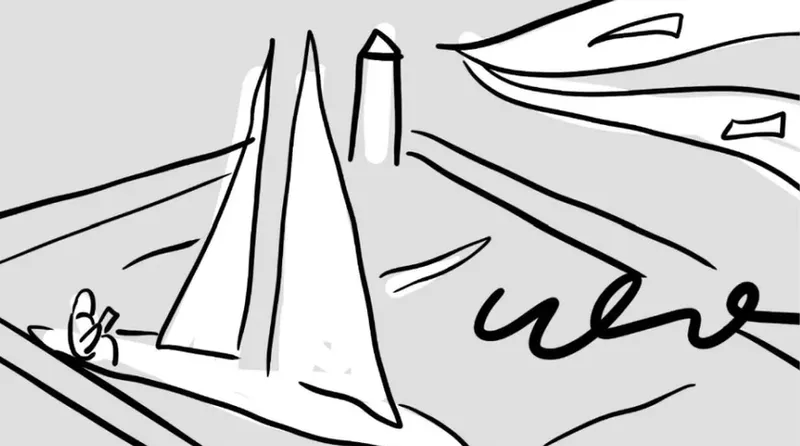
The same discipline applies to voice and sound. Confirm whether a version uses subtitles, a new voice track or a more substantial rewrite. Plan how that choice affects timing and the relationship between image and sound. Do not assume that a shorter edit is simply a translated portion of the longer film.
Separate a format change from a market change
Aspect ratio and localization are two different dimensions of the plan. A vertical version may require new framing even when the language stays the same. A regional version may require different product imagery even when the aspect ratio does not change.
Our campaign concept guide asks whether an idea can carry into another execution. Localization adds another question: does that execution remain true for this audience and this offer? Review both before declaring a version complete.

Give approval a clear sequence
Ask the client and regional team to confirm the product offer and wording first. Bring the approved language into the creative, then review its integration: readability, framing, voice, timing, imagery and destination. Finally, check the delivered files against the approved version list.
Make feedback specific to a version and a decision. “This line implies a feature we do not offer here” needs a different response from “the subtitle arrives too late.” Record the resolution where the next reviewer can see it. A file name can identify the asset, but it cannot replace a decision log.
Connect these checkpoints to the wider product launch plan. A campaign asset can be finished while its local landing page or approved offer is still unresolved. Delivery readiness should reflect that dependency.
Measure the question you are trying to answer
Before launch, define what would count as useful evidence for each market. Operational measures can include approval time, revision causes and asset defects. Audience measures might include comprehension, engagement with a defined message or the next action on the local destination, depending on the campaign’s purpose.
Keep interpretation disciplined. Differences in media, audience mix, spend, availability and landing pages can affect results. A stronger response in one region does not, by itself, prove that a translated phrase caused it. Use findings to form the next creative question and document what the comparison can and cannot establish.
Give the idea room to arrive
The right balance is not maximum uniformity or unlimited local freedom. It is a shared creative intent with explicit decisions about what needs to change, why and who can approve it. That is how regional teams can contribute expertise while the campaign remains recognizable.
For a global launch or a campaign that needs to work across markets, explore Spin’s Advertising capabilities or start a conversation. Bring the campaign ambition, market list and known product differences. Those decisions should shape the creative from the beginning.