
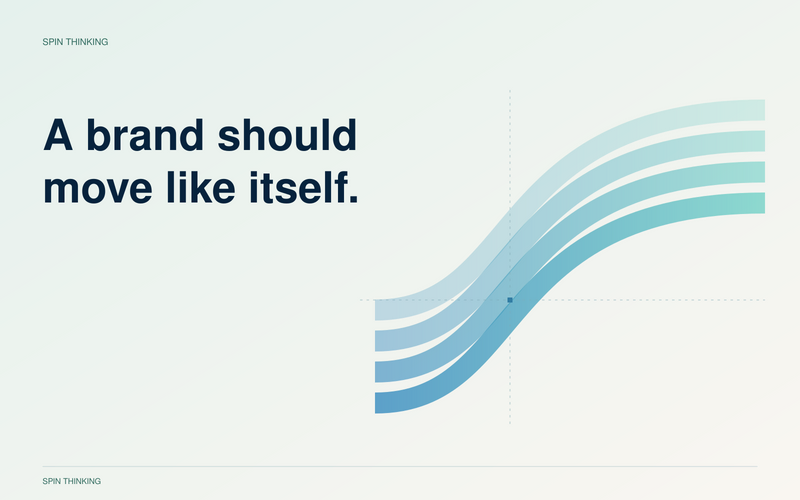
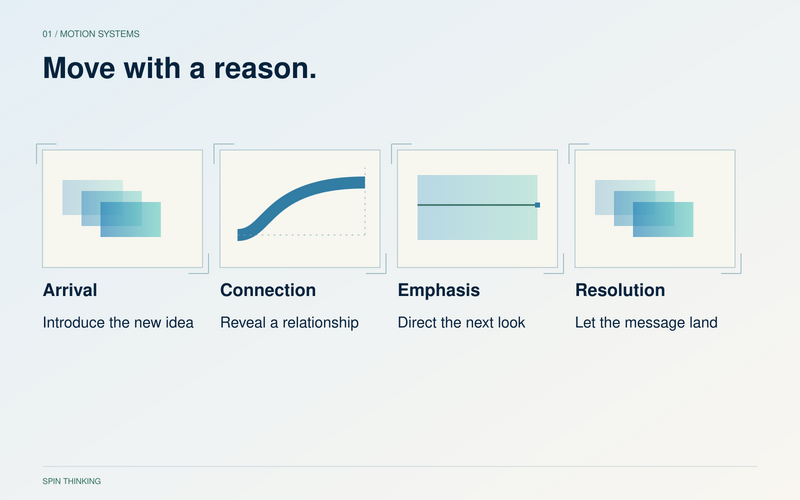
A brand motion system defines repeatable behaviors for how a brand moves: how elements appear, how attention shifts, how information connects and how a sequence resolves. It gives teams a shared logic without making every film look identical.
For an enterprise brand, inconsistency often appears between assignments. Product marketing uses one transition language, an event film another, and paid social a third. Each asset can be well made while the larger brand feels fragmented.
Begin with recurring communication needs
Review the work the team actually produces. Identify repeated jobs such as introducing a product, moving between ideas, showing a connection, emphasizing a result or ending on a clear message. Those needs are a better starting point than a reel of fashionable effects.
Choose a small set of high-value moments for the first version. Test them across a launch film, a shorter social execution and a presentation or event context. The purpose is to find principles that hold up under different constraints.
Define behavior before collecting templates
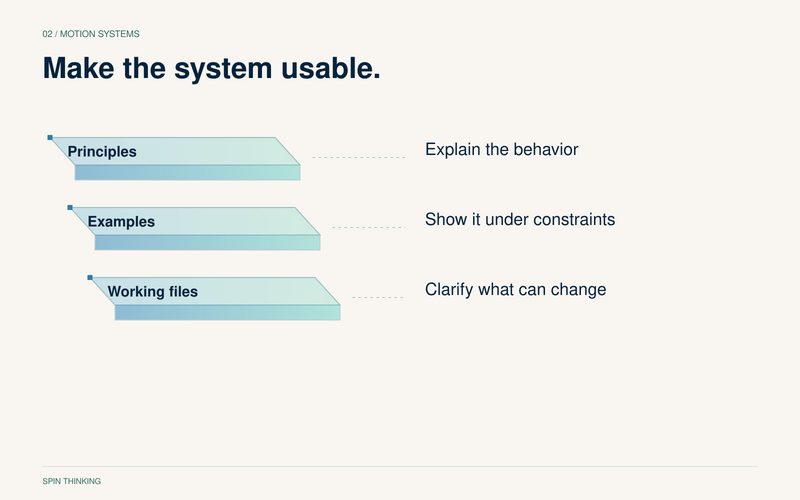
A template provides a reusable arrangement. A motion principle explains why the arrangement behaves as it does. A useful system needs both: examples people can work with and enough reasoning to extend them.
For example, a principle might say that new information enters from its point of origin and settles before the next idea arrives. The corresponding examples show a product panel, a data relationship and a text sequence using that same logic. This is a proposed illustration, not a description of a specific client system.
Make the first handoff practical
Include movement principles, representative sequences, timing guidance, type behavior, transition logic and rules for adapting layouts. Supply editable examples where the agreed scope allows them, with clear instructions about what can change.
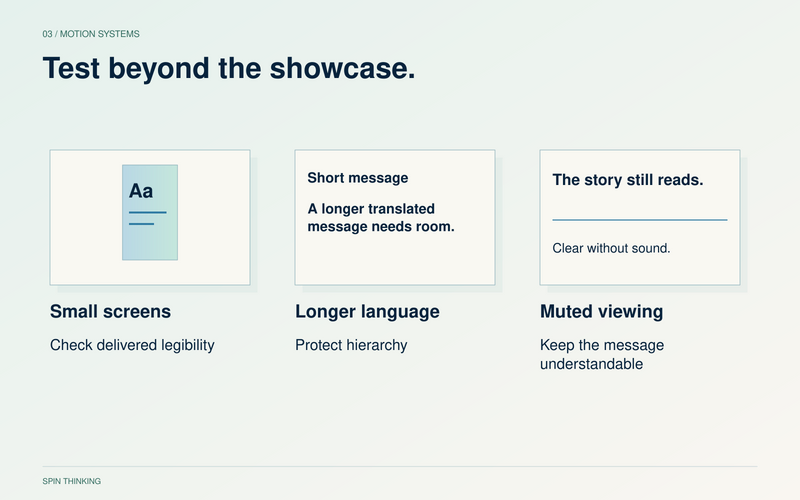
Show a useful exception as well as the ideal case. A dense product label, a longer localized headline or an unusually narrow placement can reveal whether the system is robust. A rule that works only for the showcase film is not yet ready for everyday use.
Connect motion to meaning
A connection line should indicate a relationship. A change in scale should direct attention to something that matters. A transition should help the viewer understand where the story has moved. Remove movements that compete with those jobs.
The same principle applies to product UI. Decide which details need to remain literal and which can be simplified for the story. Abstraction should make the product easier to understand without implying capabilities or interactions it does not have.
Spin’s Skillsoft Brand Refresh Sizzle and Microsoft AI in Viva film offer different examples of motion built around a coherent visual idea. They demonstrate approaches, not a claim that both projects included a complete motion-system handoff.
Test the system where it will be used
Review a version at its actual size and pace. Check that type remains readable, hierarchy survives a different aspect ratio, and motion supports rather than interrupts understanding. Consider muted viewing, localization and the context in which the piece appears.
For interfaces and websites, accessibility and reduced-motion behavior also need specialist review. A campaign film and an interactive product can share principles while requiring different implementation rules.
Keep ownership clear as the system grows
Assign someone to maintain the examples, document decisions and retire superseded files. When a new assignment reveals a gap, decide whether it needs an extension or a deliberate exception. Do not let every workaround become a new rule.
This is part of the broader task of building a brand system. The goal is to help teams make recognizable work with greater confidence, including when the next assignment does not resemble the last.
Does a small team need a motion system?
A small team can start with a few well-documented behaviors and reusable examples. Scope the system around the recurring work rather than the size of a guideline document.
Should every execution use the same timing?
No. Define a recognizable character and explain how timing responds to the message, placement and reading demands. Consistency should support communication, not override it.