

A new identity is easy to put in a proposal. The work required to make an organization use it is harder to see. That gap is where an enterprise rebrand budget becomes fragile: the creative work is funded, while product interfaces, sales materials, launch communications and team adoption remain somebody else’s problem.
Our view at Spin: budget for the brand becoming usable. Start with the business change, identify the decisions it creates, and account for the people and touchpoints that have to carry it. A strong identity matters. So does the system that lets a marketing team keep expressing it after the launch presentation.
Name the change before you price it
A visual refresh, a repositioning and a new name are different assignments. A refresh may retain the existing promise and architecture. A repositioning asks whether the business should mean something different to its audience. A name change adds dependencies across legal review, domains, product naming and customer communication.
Write a scope statement that finance and the creative team can both use: “We need to bring three product stories under one parent promise, then equip sales and marketing to explain the relationship.” This is a hypothetical example, not a Spin client brief. It creates a more useful starting point than “we need a modern brand.”
Clarify the strategic decisions first. Our guide to building brand systems shows how positioning, identity and practical applications connect.
Build the budget in four connected layers
Fund the whole change.
Research, positioning, architecture and messaging. Decide what the brand needs to mean.
Identity, voice, motion principles and representative applications. Make the direction recognizable.
Web, product, sales, campaigns and internal tools. Give every priority touchpoint an owner.
Training, asset stewardship and ongoing creative support. Make the system usable beyond launch.
For each layer, record the work, accountable owner, external fees, internal capacity, dependencies and acceptance criteria. Include a separately identified allowance for unresolved scope. Choose that allowance from your actual uncertainty rather than borrowing a standard percentage.
Direction: pay for the decisions that shape everything else
Research and alignment should resolve a specific business question. Which audience matters most? What needs to change in its understanding? Which products belong together? What evidence supports the promise? A useful strategy phase ends with decisions and a clear brief for design. Specify the research inputs, stakeholder access and decision process in the scope.
Expression: price a working system
List the identity components and the applications that will test them. A logo, color palette and type specification do not answer every question about a product launch, a sales presentation or a motion sequence. Decide which examples need to be developed, which templates need to be editable, and which source files and usage guidance your team will receive.
Condeco shows why the application list matters
In our Condeco brand work, the assignment extended from positioning and identity into a brand house, product messaging, website and interface design, collateral and environmental applications. The 68-page guidelines connected those elements to everyday use. This is evidence of scope, not a pricing benchmark or a claim about financial results.
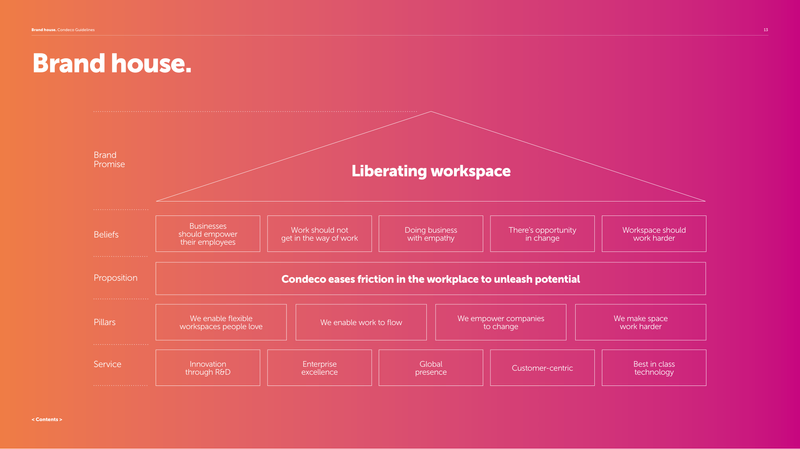
The budgeting lesson is practical: a promise needs somewhere to go. Before requesting a total, inventory the touchpoints that matter to the business. Identify the few that must demonstrate the new story at launch and the long tail that can follow.
Separate identity creation from launch expression
For Skillsoft’s brand-refresh sizzle, Skillsoft supplied an identity and guidelines created by another agency. Spin developed the concept, narrative, art direction and motion approach, then adapted the film into widescreen, square and vertical versions. These are distinct workstreams. A budget that says only “brand identity” may leave the launch film and its adaptations unspecified.

Compare proposals on the work they actually include
Use the same scope sheet for every partner. Ask each to identify research inputs, decision makers, review rounds, deliverable quantities, format adaptations, editable assets, handoff support and exclusions. Distinguish a revision within an agreed direction from a new direction or an added application. Confirm how both affect price and schedule.
Read Working With Creative Agencies alongside the proposals. Clear feedback ownership and acceptance criteria belong in the commercial conversation because they determine how the work moves.
Account for work outside the creative fee: implementation by product and engineering, asset migration, content updates, employee training, media and launch activity. Where specialist legal or technical work is needed, obtain a scoped estimate from the responsible provider. Do not substitute an old online price range for a current estimate.
Approve a launch scope your organization can deliver
Build a priority map with three groups: essential for launch, scheduled after launch, and retained for now. Each item needs an owner and a realistic delivery date. Test the plan against internal capacity as well as agency capacity. A template library has little value if nobody has time to populate it.
Bring finance a full program view with explicit assumptions and decision gates. Approve discovery against its defined outputs. Update rollout estimates when the direction and application list are clear. Keep the relationship between these phases visible, so an early approval is never mistaken for a fixed total covering unknown work.
Questions to settle before committing
How much should we budget?
Build the estimate from your scope. There is no single useful enterprise rebrand price independent of research, depth of change, applications, implementation and adoption. Ask for a scoped creative fee and a separate view of internal and specialist work.
Can we phase the work?
Yes, when dependencies are explicit. Prioritize the touchpoints that must explain the change, document what will remain in use temporarily, and give the later work an owner. Phasing should create an achievable sequence.
What does success look like?
Define it before design begins. Depending on the business problem, evaluate message comprehension, consistency across priority touchpoints, team use of approved assets and feedback from customer-facing teams. Treat these as measures to establish, not promised outcomes.
If you are shaping a rebrand scope, explore Branding or start a conversation. Bring the business change, the current touchpoint list and the decisions that remain unresolved. That is enough to begin a useful budget discussion.